sports

How to Master Mental Focus for Sports Success

Just as physical skills are vital in sports, mastering mental focus is key to your success. This blog post will guide you through practical strategies to enhance your concentration and mental resilience, enabling you to perform at your best even under pressure. By implementing these techniques, you can improve your game, reduce distractions, and increase your overall performance. Let’s probe the fundamentals of honing your mental focus for athletic excellence.

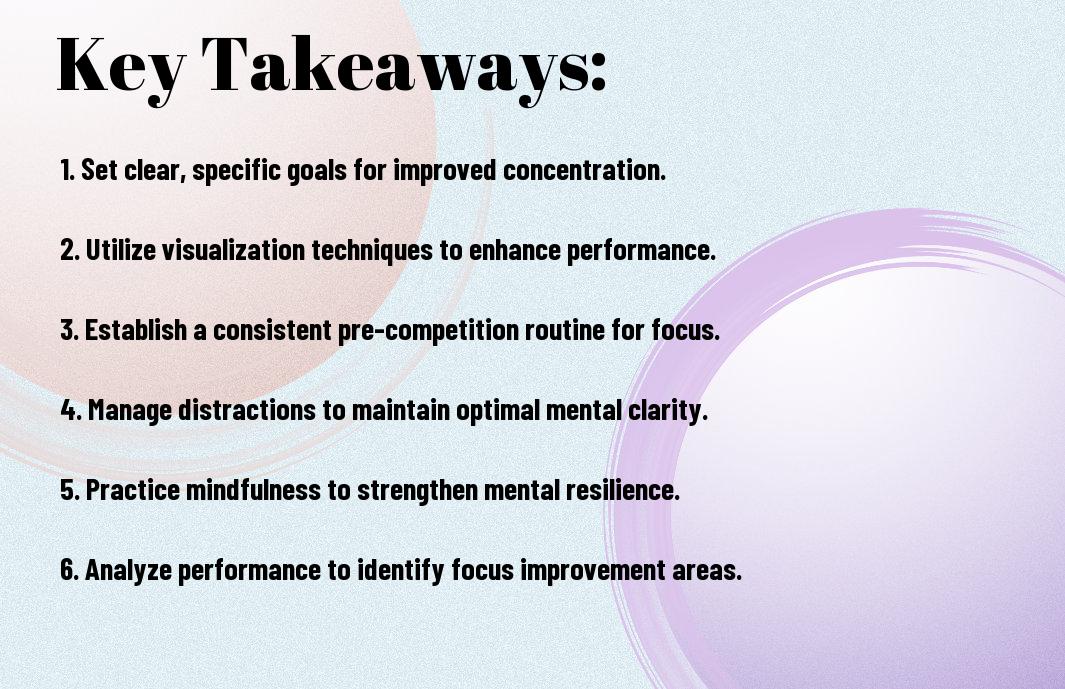
Key Takeaways:

  • Mindfulness Practice: Incorporate mindfulness exercises to enhance your awareness and concentration during training and competitions.
  • Goal Setting: Define clear, achievable goals to maintain determination and direction in your athletic journey.
  • Visualization Techniques: Utilize mental imagery to envision success and improve your performance under pressure.
  • Breathing Exercises: Implement controlled breathing strategies to manage stress and maintain focus in high-stakes situations.
  • Routine Development: Establish consistent pre-performance routines to create a mental edge and boost confidence.
Understanding Mental Focus

Before you can cultivate mental focus, it’s imperative to grasp what it entails. Mental focus revolves around your ability to concentrate on specific tasks, minimize distractions, and maintain an optimal state of alertness during competition. It is not just a skill but a vital component that can significantly influence your performance in sports. Enhancing this aspect of your mental game can lead to impressive improvements in effectiveness and consistency.

The Importance of Mental Focus in Sports

Among athletes, mental focus is often seen as a key differentiator that separates the good from the elite. Staying focused helps you execute skills with precision, respond to challenges swiftly, and maintain your competitive edge. By honing this ability, you’re setting yourself up for greater success, allowing for a complete immersion in the game where distractions fade away, and performance peaks.

The Science Behind Focus and Performance

An increasing body of research highlights the relationship between mental focus and athletic performance. Studies show that sustained focus is linked to improved decision-making, reaction times, and even physical endurance during competitions. This correlation illustrates that your mental state can directly impact your execution of skills and overall performance.

Considering the neurological aspects, your brain processes information differently when you are in a focused state. Activation of specific brain regions enhances your ability to filter out distractions and prioritize imperative tasks. Neurotransmitters, such as dopamine, play a significant role in motivation and focus, further demonstrating how imperative your mental state is for achieving peak performance. By aligning your focus with these principles, you can optimize your athletic capabilities and reach new heights in your sport.

Techniques to Enhance Mental Focus

One effective way to enhance your mental focus is by incorporating specific techniques into your training routine. Mindfulness practices, such as meditation and journaling, can help you cultivate a concentrated mindset. Additionally, establishing a consistent pre-performance routine can prepare you mentally and physically, allowing you to stay engaged with the task at hand. By integrating these techniques, you’ll find it easier to maintain attention and achieve greater success in your sports endeavors.

Visualization and Imagery

Beside focusing on physical skills, utilizing visualization and imagery can significantly improve your performance. By picturing yourself executing techniques perfectly and achieving your goals, you create a mental blueprint that your body can follow. This practice helps build confidence and can reduce performance anxiety, ultimately leading to more consistent outcomes in your sporting activities.

Breathing Exercises and Relaxation Techniques

By incorporating breathing exercises and relaxation techniques, you can enhance your focus, particularly under pressure. These practices help you calm your mind, allowing you to center your thoughts and reduce anxiety. Simple techniques such as deep-breathing exercises, progressive muscle relaxation, or guided imagery can create a sense of tranquility, ultimately guiding your thoughts back to your sport and boosting your mental concentration.

Focus on using breathing exercises to foster a state of calm and clarity before competitions or intense training. Try practicing deep breaths, inhaling for a count of four, holding for a count of four, and exhaling for a count of four. This rhythmic breathing not only calms your mind but also provides physical benefits, increasing oxygen flow to your muscles. Additionally, taking a few moments for relaxation techniques, such as stretching or mindfulness meditation, can help you reset and sharpen your focus, making you more present in the moment and ready to excel.

Setting Goals for Focus Improvement

Many athletes understand that setting clear goals is imperative for enhancing your mental focus and overall performance. By defining specific targets, you create a pathway that not only guides your training but also helps you stay committed to improving your focus. Establishing these goals enables you to measure your progress and adjust your strategies as necessary, fostering a relentless pursuit of success in your sport.

Short-term vs. Long-term Goals

Around your journey, you’ll find it beneficial to create a mix of short-term and long-term goals. Short-term goals focus on immediate improvements and can provide quick wins to motivate you, while long-term goals keep you aligned with your overarching vision. Balancing these types of goals encourages consistent growth, ensuring you remain engaged and motivated throughout your training cycle.

SMART Goals Framework

For effective goal setting, consider the SMART Goals Framework. SMART stands for Specific, Measurable, Achievable, Relevant, and Time-bound. By breaking your goals down into these components, you can create a roadmap that offers clarity and direction, allowing you to maintain focus on what truly matters in your training and performance.

It’s important to craft your goals with precision. Specificity means knowing exactly what you want to achieve, while measurability allows you to track your progress and stay accountable. Achievability ensures your goals are realistic, motivating you rather than discouraging you. Relevance ties directly to your personal aspirations and sport, and time-bound is about setting deadlines to create urgency. Using the SMART framework, you empower yourself to focus more effectively in your training and competition.

The Role of Routine and Consistency

Keep in mind that establishing a solid routine and maintaining consistency in your training can significantly enhance your mental focus during sports. Developing habits encourages your mind to settle into a flow state, where concentration thrives. For effective techniques, explore Sports Psychology Exercises for Concentration and Focus as you integrate these practices into your lifestyle.

Establishing a Pre-Game Routine

Around game day, creating a structured pre-game routine can help you mentally prepare. This routine may include visualization techniques, breathing exercises, or warm-up sessions to prime your mind and body for peak performance. Tailoring your routine to fit your specific preferences ensures it becomes a reliable element in your game preparation.

Daily Practices for Mental Clarity

Along with pre-game routines, incorporating daily mental exercises is vital for sustaining mental clarity. These exercises can be as simple as mindfulness meditation, journaling about your performance, or engaging in focus-specific drills that sharpen your concentration skills throughout your training.

Practices like visualization and affirmations are excellent daily exercises that reinforce your focus and clarity. You can create mental images of your ideal performance, which helps build confidence and prepares you for the challenges ahead. Additionally, journaling your thoughts and feelings can provide insights into your mental state, enabling you to identify patterns and areas for improvement. Consistently engaging in these activities enhances your overall mental strength, allowing you to perform at your best when it matters most.

Addressing Distractions

To achieve peak performance in sports, it’s important to address distractions that can hinder your focus. Recognizing what diverts your attention allows you to take proactive steps in fostering a more disciplined mindset during training and competitions. Establishing this awareness is the first step towards ensuring that external factors do not disrupt your mental clarity and, ultimately, your success.

Identifying Common Distractions

On your journey to mastering mental focus, recognizing common distractions is vital. These can range from external noise, such as spectators or teammates, to internal thoughts, like self-doubt or worry about performance. Taking the time to pinpoint these interruptions will empower you to combat them effectively, setting a stronger foundation for your focus.

Strategies to Minimize Interruptions

On the path to maintaining focus, implementing strategies to minimize interruptions is vital. This can include creating a designated practice space, utilizing visualization techniques, and practicing mindfulness. By consciously working to reduce distractions, you can enhance your ability to concentrate and perform at your best during critical moments.

With a few targeted strategies at your disposal, you can significantly reduce interruptions that disrupt your focus. Setting up a dedicated training environment free from distractions, incorporating visualization exercises to mentally prepare for competition, and practicing mindfulness techniques to ground yourself in the present moment can all help sharpen your concentration. Additionally, establishing a pre-competition routine can signal to your mind that it’s time to focus, thus reducing the chances of interruptions during high-stakes situations.

The Impact of Physical Health on Mental Focus

All athletes should understand that physical health significantly influences mental focus. When your body is strong and well-cared for, your mind can better concentrate on the task at hand. Engaging in effective mental training for sports success can enhance your overall performance. For more insights, check out Mental training for sports success.

Nutrition and Hydration

An athlete’s performance is deeply intertwined with proper nutrition and hydration. Fueling your body with the right nutrients allows your brain to function optimally, enhancing your focus during training and competitions. Staying well-hydrated is crucial for maintaining energy levels and mental clarity, so prioritize a balanced diet and sufficient fluid intake.

The Importance of Sleep and Recovery

Sleep is one of the most important factors influencing your mental focus. Adequate rest restores your brain function and improves cognitive abilities, allowing you to maintain concentration during high-stakes moments. Prioritizing recovery not only enhances your performance but also supports your overall well-being.

Considering the demands of your training and competition schedules, ensuring you get enough quality sleep is vital. Establish a regular sleep routine to help your body and mind recover efficiently. Incorporating rest days into your training regimen allows for muscle recovery and mental rejuvenation, creating a solid foundation for sustained focus and athletic success.

To wrap up

On the whole, mastering mental focus for sports success requires dedication and practice in integrating various strategies into your routine. By setting clear goals, visualizing your performance, and utilizing relaxation techniques, you can enhance your concentration and resilience during competitions. Additionally, exploring The Nine Mental Skills of Successful Athletes will provide you with crucial tools to sharpen your focus and improve your overall performance. Commit to these practices, and you’ll see significant improvements in your athletic endeavors.

Q: What are effective techniques to enhance mental focus in sports?

A: To enhance mental focus in sports, athletes can employ several techniques. Visualization is a powerful tool; mentally picturing oneself performing well can significantly boost concentration and confidence. Another technique is mindfulness meditation, which encourages staying present and reduces distractions. Establishing pre-performance routines can also help athletes enter the right mindset. These routines might include specific warm-up activities or breathing exercises that signal the brain to focus solely on the task at hand.

Q: How can goal-setting contribute to better mental focus in athletic performance?

A: Goal-setting plays a vital role in improving mental focus by providing clear objectives that athletes can work towards. By establishing specific, measurable, achievable, relevant, and time-bound (SMART) goals, athletes can maintain their attention on what matters most. Breaking larger goals into smaller, manageable milestones allows for a progressive approach, helping to avoid feelings of being overwhelmed. This structured focus directs energy and concentration towards incremental achievements and fosters a growth mindset.

Q: What role does self-talk play in maintaining mental focus during competitions?

A: Self-talk can significantly influence an athlete’s mental focus during competitions. Positive self-talk reinforces confidence and can counter negative thoughts that might arise under pressure. Coaches and athletes can work together to develop empowering phrases that players can repeat to themselves during challenging moments. This internal dialogue can redirect focus away from distractions and onto performance. Practicing these affirmations and challenging negative prompts can enhance an athlete’s ability to stay engaged and present throughout the event.
How to Train for Sports with Minimal Equipment

It’s entirely possible to elevate your sports training without a full gym’s worth of equipment. You can achieve outstanding results by leveraging bodyweight exercises, improvised gear, and dedicated routines tailored to your specific athletic goals. This guide will provide you with effective techniques and resources to maximize your training sessions, allowing you to enhance your performance while keeping your workouts efficient and engaging. Get ready to explore how you can train smart and stay competitive with little more than your determination and creativity.

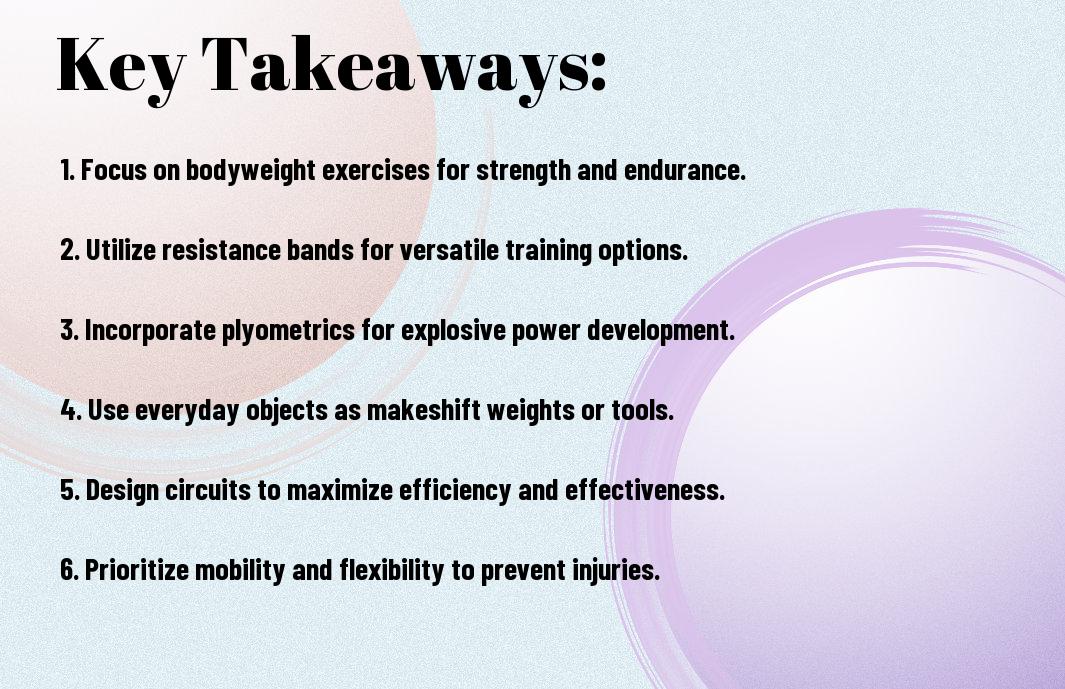
Key Takeaways:

  • Bodyweight Exercises: Utilize your own body weight for strength training through push-ups, squats, and lunges to enhance overall fitness.
  • High-Intensity Interval Training (HIIT): Incorporate HIIT workouts to boost cardiovascular fitness and endurance without the need for gym equipment.
  • Creative Use of Everyday Items: Turn common household objects like chairs and backpacks into versatile training tools for resistance and balance exercises.
  • Focus on Mobility and Flexibility: Engage in stretching routines and mobility exercises to prevent injuries and improve performance, which can be done with or without props.
  • Set Clear Goals: Establish specific and measurable fitness goals to maintain motivation and track progress during your training sessions.

Understanding Minimal Equipment Training

Your training regimen doesn’t need to be limited by the availability of fancy equipment or a fully stocked gym. Minimal equipment training emphasizes the use of simple tools and your body weight to achieve effective workouts. This approach not only reduces the barriers to training but also allows for creativity and adaptability in your workouts, leading to improved strength, endurance, and flexibility.

Benefits of Minimal Equipment

At its core, minimal equipment training provides significant advantages, including increased accessibility, versatility, and the ability to engage in functional movements. With fewer resources needed, you can train virtually anywhere—at home, in the park, or even while traveling. Moreover, this method often emphasizes bodyweight exercises, which can enhance balance and core stability.

Types of Minimal Equipment

Understanding the types of minimal equipment available can help you tailor your workouts toward your goals. Here’s a list of some effective tools:

  • Resistance bands
  • Dumbbells
  • Kettlebells
  • Medicine balls
  • Jump rope

Assume that each of these tools offers a different benefit, so you can mix and match them for varied training. Below is a breakdown of their potential advantages:

Equipment Benefits
Resistance Bands Versatile for strength and flexibility
Dumbbells Great for weight training and balance
Kettlebells Excellent for dynamic workouts
Medicine Balls Ideal for core strength and explosive movements
Jump Rope Boosts cardiovascular fitness

With this variety of tools, you can design a balanced workout routine that suits your individual needs. Ensure to include bodyweight exercises like push-ups, squats, and planks, which can enhance your overall fitness without any equipment. Combining these tools can make your workouts both effective and enjoyable.

  • Focus on compound movements
  • Incorporate progressive overload
  • Keep workouts diverse
  • Prioritize form over quantity
  • Utilize intervals for maximum efficiency

Assume that by embracing minimal equipment training, you are equipping yourself with the necessary skills to train anywhere, paving the way for consistent and effective fitness progression.

Designing Your Training Program

Some athletes may feel overwhelmed when creating a training program with minimal equipment, but a well-structured plan can maximize your efforts. Start by identifying the key components of your sport and then incorporate those elements into your routine. Focus on bodyweight exercises and functional movements that can be performed anywhere. Tailor the program to fit your specific needs, and adjust it as you progress to ensure continual improvement.

Setting Goals

Goals are important for any training program. Establish both short-term and long-term objectives that are specific, measurable, and attainable. Whether you aim to increase your endurance, strengthen your core, or refine your skills, having clear milestones will keep you motivated and focused on your training journey.

Creating a Balanced Routine

Balanced training involves incorporating various components of fitness, ensuring that you address strength, flexibility, endurance, and skill development. Vary your workouts to include different exercises targeting various muscle groups and energy systems, preventing overuse injuries. By integrating a mix of cardio, strength, and mobility exercises into your routine, you can enhance overall performance and support holistic development.

Your balanced routine should include a combination of strength training, cardiovascular exercises, and flexibility work. Include exercises like push-ups, squats, lunges, and planks for strength, while running, cycling, or jumping rope can boost your endurance. Don’t forget to incorporate stretching and mobility drills to improve flexibility and prevent injuries. Evaluate your routine regularly, adjusting the intensity and focus based on your progress and specific sport requirements.

Key Exercises for Strength and Conditioning

Many athletes overlook the potential of training with minimal equipment. By incorporating a variety of key exercises, you can efficiently build strength and conditioning without the need for a gym. Focus on bodyweight movements, resistance bands, and other versatile tools to maximize your training. This approach enables you to enhance your performance in your chosen sport while developing overall fitness, whether at home or outdoors.

Bodyweight Exercises

An effective way to build strength is through bodyweight exercises. These movements, such as push-ups, squats, and lunges, utilize your own weight as resistance, making them accessible anywhere. By varying your routines and incorporating progressive overload, you can continuously challenge your muscles, improving endurance and strength without any equipment needed.

Resistance Band Workouts

Besides bodyweight exercises, resistance bands are a fantastic training tool that offers versatility and portability. These bands can provide resistance in multiple directions and can be easily adjusted to suit your fitness level. The lightweight and compact nature of resistance bands makes them simple to transport, enabling you to maintain your training regimen on-the-go.

Resistance bands not only enhance your strength training but also improve your flexibility and coordination. They can be used for a range of exercises targeting different muscle groups, from upper body to lower body workouts. Integrating band exercises like chest presses, rows, or lateral leg raises in your routine will help you build a balanced and resilient physique. With proper technique and consistency, resistance bands can be a powerful ally in your training toolkit.

Agility and Speed Training

To enhance your performance in sports, agility and speed training is vital. With minimal equipment, you can implement effective exercises that challenge your coordination, balance, and quickness. Incorporating these elements into your routine will not only improve your physical capabilities but also increase your overall athleticism, allowing you to outmaneuver opponents and excel in your chosen sport.

Drills for Improving Agility

Training for agility can be done anywhere, requiring just your bodyweight or simple markers. Drills like lateral shuffles, cone zigzags, and high knees can help sharpen your foot speed and coordination. Focus on performing these exercises at different intensities to push your limits and keep your workouts dynamic. Regular practice will lead to noticeable improvements in your agility over time.

Speed Training Techniques

To develop your speed, incorporate techniques like sprinting drills and interval training into your routine. These strategies can build your anaerobic capacity and enhance explosive power. Utilizing a flat surface or a track, concentrate on short bursts of high-intensity sprints to mimic the demands of your sport. This targeted approach will enable you to experience significant gains in your speed, elevating your performance on the field or court.

Understanding how to effectively implement speed training techniques is vital for improving your quickness. Focus on proper form and acceleration mechanics during your drills. Incorporate hill sprints or resistance training elements like harnesses or sleds (if available) to increase resistance and challenge your muscle fibers. Additionally, ensure adequate rest between sprints to allow for maximum effort on each attempt. This balanced approach not only boosts your speed but also prepares your body for competitive scenarios you may face in sports.

Incorporating Endurance Activities

Once again, you can enhance your athletic performance through endurance activities that require minimal equipment. Look for bodyweight workouts, running, or cycling in your local area to improve your stamina. For more tips, check out Trying to develop a no/minimal equipment strength training … to help you adapt your training effectively.

Cardio Options with Minimal Gear

After assessing your fitness goals, explore various cardio options that don’t require fancy equipment. Activities like jogging, jumping jacks, and burpees are excellent ways to elevate your heart rate and boost endurance without the need for a gym.

Interval Training Protocols

By implementing interval training protocols, you can maximize your endurance in a short amount of time. This approach involves alternating between periods of high-intensity effort and low-intensity recovery.

With interval training, you can vary the duration of work and rest intervals according to your fitness level. Start with 30 seconds of sprinting, followed by 1 minute of walking or jogging. As you improve, experiment with different ratios, such as 1:1 or 2:1, to further challenge yourself and enhance your cardiovascular efficiency.

Tracking Progress and Staying Motivated

After setting your fitness goals, tracking progress and staying motivated become important elements of your training journey. Utilizing simple methods to measure your achievements, whether through apps, journals, or periodic self-assessments, can keep you engaged and focused on reaching your objectives. Find a system that works for you, and regularly evaluate your advancements to maintain enthusiasm and commitment to your training process.

Monitoring Training Outcomes

The key to understanding your growth lies in monitoring your training outcomes. By keeping records of your workouts, including repetitions, duration, and intensity, you can visualize your progress over time. This not only helps you identify areas for improvement but also serves as a motivating factor as you see how far you’ve come.

Strategies for Maintaining Motivation

Around your training schedule, incorporate strategies that will help keep your motivation levels high. Engaging with a community, setting smaller milestones, and varying your workouts can create a sense of excitement and help you push through challenging moments. Connecting with others who share your goals can also provide a support network to cheer you on.

Considering different techniques can further enhance your motivation. Setting specific, attainable goals helps break the long journey into manageable steps. Celebrate each accomplishment, no matter how small, to build self-confidence and create positive reinforcement. Additionally, designing a varied routine can prevent boredom, making your training sessions stimulating and enjoyable. By actively involving yourself in your progress and surrounding yourself with positivity, you’ll find it easier to stay committed to your training regimen.

Final Words

Upon reflecting on how to train for sports with minimal equipment, you can achieve significant results by focusing on bodyweight exercises, functional movements, and creative use of everyday items. Incorporating flexibility, strength, and endurance workouts will keep your training well-rounded. Always set clear goals and create a consistent schedule to stay motivated. Emphasize the importance of proper form to prevent injuries and enhance performance. With determination and resourcefulness, you can elevate your athletic abilities without the need for a fully equipped gym.

Q: What types of exercises can I do with minimal equipment for sports training?

A: There are numerous exercises you can incorporate into your training regimen with minimal equipment. Bodyweight exercises such as push-ups, squats, lunges, and planks are excellent for building strength and endurance. Additionally, using items like resistance bands or a jump rope can enhance your workouts. For agility training, cone drills can be done with household items like water bottles. By combining different bodyweight movements and functional training, you can create a well-rounded program that targets the necessary muscle groups for your sport.

Q: How can I ensure that my training is effective without access to a gym or specialized gear?

A: To maximize the effectiveness of your training without gym equipment, focus on creating a structured workout plan that incorporates progressive overload. This can be achieved by increasing the intensity of your workouts over time through higher repetitions, shorter rest periods, or more challenging variations of exercises. Consistency is key—aim for regular workouts and track your progress. Additionally, prioritize proper nutrition and hydration, as they significantly affect performance and recovery. Using online resources for workout routines can also provide new ideas to keep your training dynamic.

Q: How can I stay motivated to train for my sport with limited equipment?

A: Staying motivated can be challenging, especially when training with minimal resources. Setting specific, measurable, and achievable goals for your training can help maintain focus and direction. Mixing up your workouts by trying different exercises or training styles, such as high-intensity interval training (HIIT), can also make sessions more enjoyable. Engaging with friends or joining online fitness communities can further enhance motivation, as shared goals and accountability can provide additional encouragement. Lastly, celebrate small victories and progress, as recognizing your improvement can boost your enthusiasm for continued training.

Skip to content