Most athletes understand that a quick reaction time can set you apart in your sport, whether you’re on the court, field, or track. Enhancing your ability to respond swiftly not only boosts your performance but also gives you a competitive edge. In this post, you will learn effective techniques and exercises to sharpen your reflexes, improve your hand-eye coordination, and ultimately elevate your game. Let’s look into the strategies that can transform your reaction time and help you perform at your best.
Key Takeaways:
- Practice Drills: Regularly incorporate specific drills that target quick movements and reflexes to enhance your reaction time.
- Focus on Footwork: Improve your footwork with agility exercises, as it directly affects your speed and ability to respond to fast-moving situations.
- Mental Preparation: Engage in visualization techniques and reaction time games to sharpen your mental acuity and decision-making under pressure.
- Strength Training: Include resistance training in your routine to build overall strength, which can help in faster, more explosive movements.
- Staying Fit: Maintain overall physical fitness through cardiovascular activities, as a stronger cardiovascular system supports better oxygen flow and stamina during performance.
Understanding Reaction Time
Before exploring ways to enhance your athletic performance, it’s crucial to grasp the concept of reaction time. This key element in sports refers to the duration it takes for you to respond to a stimulus, be it an opponent’s movement or the starting gun in a race. A faster reaction time can give you an edge in competitions, as quick decision-making often separates winners from the rest.
Definition and Importance
An effective reaction time can be the difference between winning and losing in many sports. It encompasses the time it takes for your brain to process information and instruct your body to act. Improving this skill can lead to better overall performance and increased success in your athletic endeavors.
Factors Influencing Reaction Time
Reaction time is influenced by several elements that you can control or improve upon. Factors include your physical fitness level, mental alertness, and practice conditions. Moreover, environmental variables such as distractions can also play a significant role. Consider these aspects:
- Your physical conditioning affects your speed and agility.
- Your mental focus can enhance your ability to respond quickly.
- Your familiarity with specific scenarios leads to faster processing.
- Any improvements you make in these areas can significantly reduce your reaction time.
Another critical aspect of reaction time is training techniques that target its improvement. Regular practice in drills and specific exercises can sharpen your reflexes and enhance your overall athletic performance. You should pay attention to the following elements:
- Your training environment should mimic competition conditions.
- Your response time drills should emphasize quick decision-making.
- Your mental preparation can boost focus and alertness.
- Any consistent practice in these areas will yield noticeable benefits in your reaction time.
How to Train Your Reaction Time
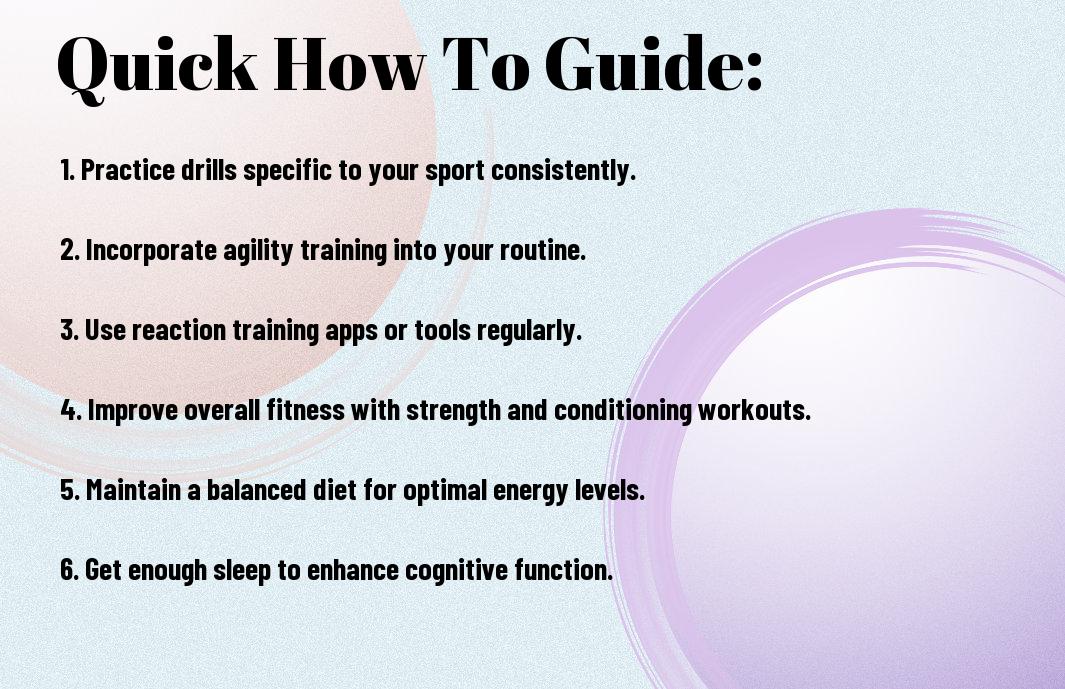
One effective way to enhance your reaction time in sports is through targeted training. Focus on drills that challenge your speed and decision-making abilities. Incorporate activities that simulate game scenarios, allowing you to practice reacting quickly under pressure. Consistency in your training regimen will lead to noticeable improvements, so dedicate time each week to refine your skills.
Specific Drills and Exercises
Time-specific drills, like agility ladder exercises and reaction ball workouts, can significantly boost your response speed. These drills require you to make quick movements and adjustments, which helps develop your neuromuscular coordination. Implement these drills into your training routine to build the necessary muscle memory for improved on-field performance.
Incorporating Technology and Tools
Train your reaction time by utilizing various technologies and tools available today. Incorporating light-up reaction timers or apps designed for athletes allows you to measure and improve your speed and accuracy. Virtual reality training systems are also beneficial, as they create realistic scenarios requiring rapid responses, enhancing cognitive processing and physical reaction together.
This combination of traditional drills with modern technology can provide you with a diverse training approach, allowing for faster adaptations. By constantly measuring your progress through these tools, you can identify areas for growth and keep your training engaging. Experiment with different technologies to find what works best for you, and stay committed to seeing continuous improvement in your reaction time.
Tips for Mental Preparation
All athletes can significantly enhance their reaction time through effective mental preparation. Consider integrating the following practices into your routine:
- Practice mindfulness meditation to improve focus.
- Set realistic goals to build confidence.
- Engage in positive self-talk to reinforce motivation.
- Develop a pre-performance routine to create familiarity.
After implementing these strategies, you’ll likely notice an increase in your reaction time during competition.
Visualization Techniques
Mental imagery plays a powerful role in enhancing your athletic performance. By picturing yourself executing specific skills, you can create strong neural pathways that help improve your response time. Visualization allows you to anticipate different scenarios and reactions, preparing your mind and body before you face real situations in practice or competition.
Focus and Concentration Strategies
Assuming you want to boost your focus during sports, you can adopt several techniques to sharpen your mental clarity and reaction time.
Tips for enhancing your focus include practicing deep breathing exercises to calm your mind, limiting distractions in your environment, and being present in the moment through mindfulness practices. Additionally, setting short-term goals during practice can help you concentrate on specific skills, gradually improving your overall performance. By incorporating these strategies, you’ll find it easier to maintain focus during high-pressure situations, ultimately leading to faster reaction times in your sport.
Nutrition and Recovery for Optimal Performance
Despite the intense training you may undertake, your reaction time can significantly benefit from proper nutrition and recovery. A well-balanced diet supports your energy levels and cognitive function, allowing you to perform at your best. Including the right nutrients aids muscle repair and keeps your body in peak condition, which is crucial for improving your performance in sports.
Foods that Enhance Reaction Time
Now, to sharpen your reaction time, focus on incorporating foods rich in antioxidants, omega-3 fatty acids, and complex carbohydrates into your diet. Berries, fatty fish, and whole grains provide crucial nutrients that promote brain health and mental clarity, keeping you alert and responsive on the field or court.
Importance of Rest and Recovery
Rest is just as significant as training when it comes to enhancing your reaction time. Your body needs time to repair itself and consolidate the skills you’ve learned during practice. Inadequate recovery can lead to fatigue and decreased performance, hindering your ability to respond quickly in critical moments.
Time spent on recovery allows your muscles to rebuild and your mind to recharge. Quality sleep is paramount; it not only boosts your physical performance but also enhances cognitive functions such as reaction time and decision-making. Incorporating rest days into your training regimen helps prevent burnout and ensures that you are mentally and physically ready to push your limits during competitions.
Sport-Specific Strategies
Now, enhancing your reaction time involves implementing strategies tailored to your specific sport. Whether you’re running, playing soccer, or engaging in martial arts, each sport demands unique skills and responses. By integrating drills and exercises that mimic real-game scenarios, you can develop the necessary reflexes and improve your overall performance.
Tailoring Training to Your Sport
On the path to improving your reaction time, it’s necessary to customize your training according to the demands of your sport. Focus on drills that replicate the speed and agility you’ll need during competition. For instance, soccer players may benefit from dribbling drills, while basketball players should practice quick lateral movements, ensuring your training stays relevant and effective.
Analyzing Professional Athletes
Tailoring your improvement efforts can be greatly enhanced by analyzing how professional athletes enhance their reaction times. Study techniques they utilize, such as specific warm-up routines, reflex drills, and visualization techniques. Understanding their approach can provide you with relevant insights and inspire you to incorporate similar practices in your training regimen.
Athletes at the professional level often adopt advanced methods to sharpen their reaction time. They analyze their performances meticulously, pinpointing areas where quick decision-making is vital. By observing their training routines, you can identify drills that focus on reaction-based scenarios, such as response to sudden stimuli or multi-directional movements, helping you enhance your training for better results on the field or court.
Measuring and Tracking Progress
After you implement various exercises and drills to enhance your reaction time, it’s crucial to monitor your improvement. Regularly measuring your performance through tests will help you see how your efforts translate into faster reactions on the field. By tracking your progress consistently, you can identify patterns, areas that need further work, and celebrate your milestones.
Tools and Methods for Assessment
There’s an array of tools you can use to assess your reaction time effectively. Devices like reaction timers, apps designed for sports training, or even simple stopwatch methods can provide valuable data. You can also incorporate drills that require quick responses, such as catching a ball or responding to visual stimuli, and record your reaction rates to build a comprehensive view of your progress.
Setting Realistic Goals and Milestones
Realistic goal-setting is crucial for maintaining motivation and tracking your improvements over time. Focus on specific, achievable targets, such as reducing your reaction time by a certain percentage within a defined period. This approach enables you to create manageable milestones that you can celebrate, reinforcing your dedication to improving your skills.
This structured method not only gives you direction but also enhances your confidence as you notice improvements in your reaction time. To set effective goals, consider factors such as your current baseline performance and the time you can dedicate to training. Break your long-term objectives into smaller, actionable steps, and reassess periodically to adjust your targets as needed, ensuring that you’re always challenged yet able to achieve success.
Conclusion
To wrap up, enhancing your reaction time in sports involves a combination of targeted exercises, mental training, and proper nutrition. By consistently practicing drills and engaging in activities that challenge your speed and agility, you can significantly boost your performance. Make sure to stay focused and maintain a healthy lifestyle to support your training. For more tips and tricks, check out this resource on How to Improve Reaction Time.
Q: What specific drills can help enhance my reaction time in sports?
A: There are several effective drills that can help improve reaction time. One popular method is performing plyometric exercises, such as box jumps or lateral jumps, which develop explosive strength and quick body movement. You can also engage in reaction ball drills, where a small, irregularly shaped ball is bounced off a wall, forcing you to react quickly to its unpredictable bounces. Another useful approach is practicing shadowing, where you mimic the movements of a partner or coach. This practice makes your body more responsive to rapid changes in direction during actual gameplay.
Q: How does visual training impact my reaction time in sports?
A: Visual training plays a significant role in improving reaction time. It focuses on enhancing your ability to process and respond to visual stimuli faster. Techniques like using a strobe light can help in this regard; this tool intermittently flashes light, requiring you to react quickly when the light is visible. Additionally, performing gaze control exercises, like tracking moving objects or engaging in board games that require quick thinking, can sharpen your vision-related reaction skills. Better visual acuity allows athletes to process the game situation more effectively and make quicker decisions on the field or court.
Q: What role does mental training play in improving reaction time?
A: Mental training is necessary for honing reaction time in sports. Visualization techniques, such as imagining yourself performing specific movements or plays in your sport, can help reinforce the neural pathways involved in those actions. Alongside visualization, practicing mindfulness and focus can enhance your ability to stay present and react appropriately during high-pressure situations. Engaging in sports psychology exercises, such as self-talk and concentration routines, can further boost your confidence and mental agility, making for quicker and more accurate reactions in competition.

