There’s a fascinating journey behind the Olympic Games, one that spans over two millennia and connects cultures worldwide. As you explore into the rich history of these games, you’ll discover how they evolved from ancient competitions in Olympia, Greece, to the spectacular global event we see today. Understanding this history not only enhances your appreciation for the athletic prowess on display but also highlights the values of unity and excellence that the Games promote. Join us as we explore the key milestones that have shaped the Olympic tradition into what it is now.
Key Takeaways:
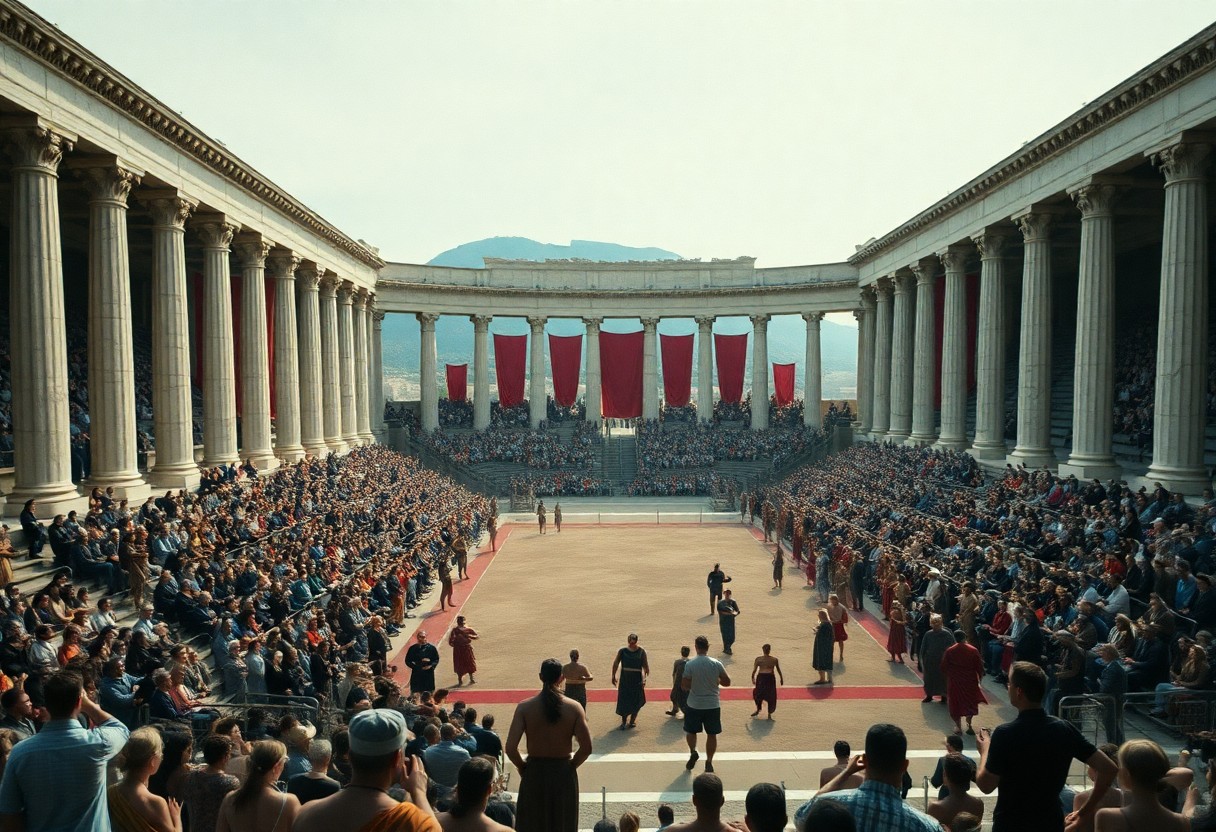
- Origin: The Olympic Games originated in ancient Greece around 776 B.C. as a festival honoring the god Zeus.
- Decline: The Games declined in popularity and were eventually abolished in 393 A.D. by Roman Emperor Theodosius I.
- Modern Revival: The Olympics were revived in 1896 by Pierre de Coubertin, leading to the establishment of the International Olympic Committee (IOC).
- Global Reach: Today, the Olympics take place every four years, featuring thousands of athletes from over 200 nations competing in a wide range of sports.
- Symbolism: The Olympic Rings and the torch relay serve as symbols of unity and peace among participating countries.
Origins of the Ancient Olympic Games
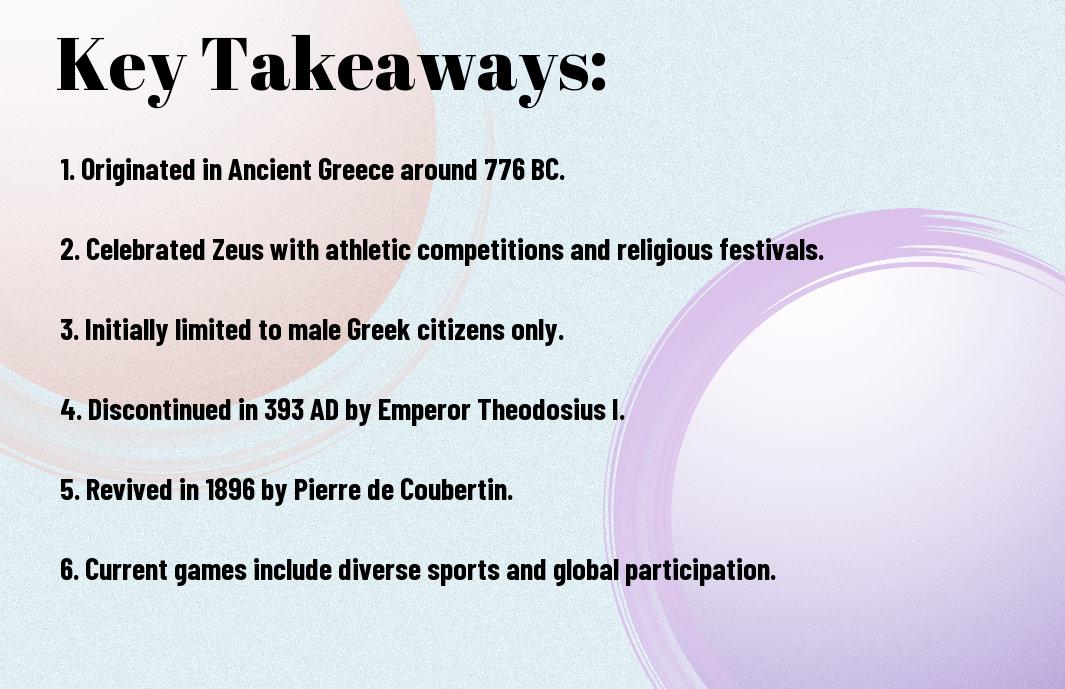
Before the spirit of competition blossomed into what we know today, the Ancient Olympic Games emerged in Greece around 776 BCE. Established in Olympia as a tribute to Zeus, these games served not only as athletic contests but as a unifying cultural event. To probe deeper, you can explore Let the Games Begin: The First Olympics.
Historical Context
Across ancient Greece, the Olympic Games were more than just a series of athletic events; they marked a significant occasion that transcended regional rivalries. The games fostered unity among the often-warring city-states and encouraged the exchange of ideas, culture, and religion.
The First Olympiad
Any account of the Ancient Olympic Games begins with the First Olympiad in 776 BCE, which featured a mere sprinting event. The winner of this inaugural competition was Coroebus, a cook from Elis, who would become a celebrated figure in Greek history.
This first Olympiad created a framework for future competitions, introducing additional events such as wrestling and the pentathlon over time. The games also established the tradition of recording winners, which emphasized the importance of athletic excellence, and paved the way for the Olympic spirit that would resonate through centuries.
The Evolution of the Games
Some of the most significant changes to the Olympic Games have occurred over the centuries, transforming it from a local event into a global phenomenon. Originally, the Games started with just a few athletic contests held in Olympia, but as time progressed, new sports were introduced, and the format of competition evolved. You can see how the infusion of cultural influences and advancements in athletics have shaped the modern Games, creating a diverse and dynamic sporting landscape.
Changes in Events
After the initial focus on running events, the inclusion of various disciplines like wrestling, boxing, and pentathlon marked the Games’ expansion. As you explore the history of the Olympics, you’ll find that sports like swimming, gymnastics, and team events were later introduced, reflecting changing sports interests and growing public enthusiasm.
Expansion of Participation
For many years, participation in the Olympic Games was limited to male athletes from specific regions. Over time, the movement for inclusivity allowed athletes from different nations and genders to participate. This shift not only enriched the competition but also helped encapsulate the spirit of unity and sportsmanship that the Games symbolize today.
To truly understand the significance of this expansion, consider how the inclusion of female athletes and nations from around the world began to transform the Olympics into a more representative global event. You’ll notice that each edition of the Games has seen new countries joining the ranks of competitors, fostering camaraderie and understanding among diverse cultures. This development has played a pivotal role in redefining what the Olympics stand for in the modern era, emphasizing equality and celebration of athletic prowess across the globe.
The Decline of the Ancient Olympics
All great things must come to an end, and the Ancient Olympics were no exception. As the political landscape of Greece evolved, internal strife, foreign invasions, and the rise of the Roman Empire led to a decline in participation and enthusiasm for the Games. The shift in values from athletic competition to political power took a toll on the Olympic spirit that had thrived for nearly a millennium.
Political and Social Factors
Along with changing political dynamics, various social factors contributed to the decline of the Ancient Olympics. The reorganization of city-states and their priorities led to less investment in athletic endeavors. Key influences included:
- Increased warfare and instability among Greek city-states
- Shifts in public sentiment towards entertainment
- The rise of imperial Rome and its focus on different forms of amusement
Assume that the Olympics were a reflection of their society; as values shifted, so too did the relevance of the Games.
The End of the Ancient Era
About the 4th century AD, the Ancient Olympic Games faced their ultimate decline. With the rise of Christianity, pagan traditions, including the Olympic Games, were increasingly viewed with disdain. The last recorded Olympic event was held in 393 AD, when Emperor Theodosius I officially banned the Games to promote Christianity. This marked the end of a rich tradition that had united Greeks and showcased their athletic prowess for centuries.
This shift away from the Olympic traditions symbolizes a significant transformation in societal values and priorities. As you reflect on this decline, consider how the political and social upheavals of the time influenced cultural practices. The end of the Ancient Olympics did not merely signify the loss of a sporting event; it highlighted a broader change in the identity of the people and their connection to competitive spirit. While the Games lay dormant for many centuries, their spirit would later be revived, paving the way for the modern Olympic movement.
The Revival of the Modern Olympic Games
Now, the revival of the modern Olympic Games began in the late 19th century, driven by a desire to promote international unity and showcase athletic excellence. Spearheaded by Baron Pierre de Coubertin, the first modern Olympics took place in Athens in 1896, reestablishing the Games as a global event that celebrates sport and culture. Your understanding of these events lays the foundation for appreciating how the Olympics evolved into today’s multifaceted spectacle.
Key Figures in the Revival
One of the pivotal figures in the revival of the Olympic Games was Baron Pierre de Coubertin, who believed in the educational value of sports. He worked tirelessly to establish the Olympic Movement, emphasizing the importance of physical education and international cooperation. Your awareness of Coubertin’s vision helps you appreciate the ideals that continue to shape the Olympics today.
The First Modern Olympics
Games held in 1896 in Athens marked a significant turning point in sporting history, bringing together athletes from 13 nations to compete in 43 events. This remarkable event reignited interest in the ancient tradition and set the stage for future Olympics. You can see how these early competitions laid the groundwork for the larger, more diverse Olympics we know now.
A wide range of sports was featured in the inaugural modern Olympics, including athletics, swimming, and gymnastics. Athletes competed in front of an enthusiastic crowd, with many events held in iconic venues such as the Panathenaic Stadium. You’ll find it fascinating how this first modern Olympics only included male competitors, reflecting the societal norms of the time, yet it set a precedent for the inclusion of more diverse participants in subsequent Games.
The Olympic Movement in the 20th Century
For much of the 20th century, the Olympic Movement evolved significantly, reflecting global changes and the complex socio-political landscape. You will notice that the Games transformed from a predominantly amateur event to a global spectacle with considerable commercial interests. The introduction of various new sports and disciplines, along with the international scope, has made the Olympics an emblem of unity and competition worldwide.
Major Milestones
Along the timeline, several key milestones have shaped the Olympic Movement, such as the first televised Olympics in 1936, which brought the Games to millions around the world. You might note the introduction of the Winter Olympics in 1924, along with the inclusion of women in various events, marking significant strides toward inclusivity. The establishment of the International Olympic Committee’s (IOC) foundations also played a pivotal role in the administration and global outreach of the Games.
Impact of World Wars
Across the two World Wars, the Olympic Games faced substantial disruptions, as they were canceled in 1916, 1940, and 1944 due to global conflict. You should consider how these cancellations not only affected athletes and their aspirations but also reflected broader issues of peace and international dialogue during turbulent times.
Wars halted the Olympic rhythm, highlighting the fragility of international cooperation. You may find it intriguing that, despite these interruptions, the resumption of the Games post-war signified hope and the desire for camaraderie among nations. The 1948 London Olympics, often referred to as the “Austerity Games,” marked a powerful revival, symbolizing resilience and the restored commitment to global fellowship, thus influencing the future direction of the Olympic Movement significantly.
The Olympics in the 21st Century
Despite the challenges posed by globalization, the Olympic Games in the 21st century continue to evolve, drawing millions of viewers and athletes from around the world. You witness a blend of tradition and modernity, as host cities strive to showcase not only sporting excellence but also advancements in technology, sustainability, and inclusivity. As you explore these contemporary games, you can appreciate how they reflect broader societal changes and ambitions.
Technological Advances
The 21st century has ushered in unprecedented technological advancements that have transformed the Olympic Games. You now experience enhanced broadcasting methods, real-time data analysis, and immersive viewing options, such as virtual reality and augmented reality, which provide a deeper understanding of the events. This technology not only engages you as a spectator but also improves athlete performance through sophisticated training equipment and analytics.
Social and Political Issues
Issues related to social justice, equality, and political tensions have become increasingly apparent in the Olympic arena. You may have noticed athletes using their platforms to advocate for change, addressing matters such as racial equality and LGBTQ+ rights. The Olympics serve as a stage for dialogue, where you can observe how sports intersect with global issues, often igniting conversations that resonate well beyond the stadium.
In fact, the Olympics often reflect the pulse of society. You may find that athletes and organizations both leverage their visibility to spotlight pressing social issues, while political conflicts can influence participation and diplomatic relations. The World Anti-Doping Agency’s commitment to clean sport also shows how integrity plays a vital role in the narrative. By highlighting these themes, the Olympics not only entertain but also inspire you to care about the world in which you live.
To wrap up
On the whole, your understanding of the Olympic Games’ history reflects a journey through time, culture, and human achievement. From the ancient competitions held in Olympia to the modern celebration of global unity and sportsmanship, you can appreciate how these Games have evolved. They embody not just athletic excellence but also peace and camaraderie among nations. As you reflect on this rich legacy, consider how the spirit of the Olympics continues to inspire generations of athletes and spectators alike.
Q: What were the origins of the Olympic Games?
A: The origins of the Olympic Games can be traced back to ancient Greece around 776 BC. They were held in Olympia, in honor of Zeus, the king of the Greek gods. The early Games featured a variety of athletic competitions, including running, wrestling, and chariot racing, and were part of a religious festival. The Olympics became a significant event in Greek culture, serving not only as a showcase for athletic prowess but also as a means for city-states to come together in peace.
Q: How did the Olympic Games evolve over time?
A: The Olympic Games evolved significantly over the centuries. After the initial events, additional sports, such as boxing and pentathlon, were introduced. The Games grew in popularity, leading to various local festivals and competitions that mirrored the Olympic spirit. However, by the Emperor Theodosius I’s decree in 393 AD, the Olympic Games were abolished as part of efforts to suppress pagan practices. It wasn’t until the late 19th century that the Olympics were revived by Baron Pierre de Coubertin, leading to the first modern Olympic Games held in Athens in 1896. Since then, the Games have expanded to include winter sports, women’s competitions, and a greater number of participating nations.
Q: What is the significance of the Olympic Games in contemporary society?
A: The Olympic Games hold significant cultural, social, and political importance in contemporary society. They serve as a global platform that promotes peace and unity through sports, bringing together athletes from various countries to compete and showcase their talents. The Olympics also highlight issues such as diversity, inclusion, and international cooperation. Furthermore, they have become a major commercial event, influencing economic aspects through sponsorship, tourism, and city branding. Additionally, the Games continue to inspire individuals and communities by promoting ideals of excellence, fair play, and perseverance.