improvement

How to Improve Your Jumping Ability for Sports

Many athletes seek to enhance their jumping ability to boost performance across various sports. Whether you aim to skyrocket for a rebound in basketball or clear a hurdle in track, improving your vertical leap requires targeted workouts and techniques. This guide will walk you through effective strategies to increase your jumping height, maximizing your gains on the court or field. For further insights, check out this resource on How to improve the vertical jump?

Key Takeaways:

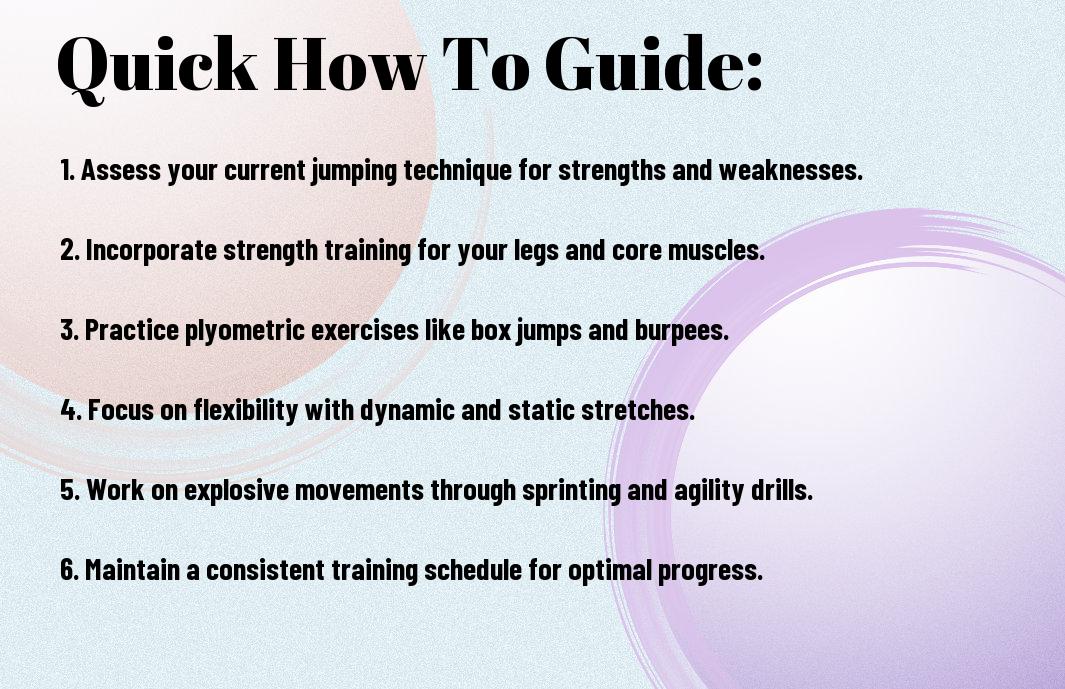
  • Strength Training: Incorporate exercises like squats and lunges to build the muscles needed for explosive jumps.
  • Plyometric Drills: Engage in activities such as box jumps and depth jumps to improve your power and speed.
  • Proper Technique: Focus on your jumping form, including take-off and landing mechanics, to enhance performance and reduce injury risk.
  • Flexibility and Mobility: Perform stretching routines to increase your range of motion, which contributes to higher jumps.
  • Consistency: Develop a regular training schedule focusing on jumping ability to see significant improvements over time.

Understanding Jumping Ability

For athletes, jumping ability is a key physical attribute that can significantly influence performance across various sports. Effective jumping not only aids in offensive and defensive maneuvers but also enhances overall athleticism. To improve your jumping skill, it’s important to grasp the mechanics of how your body generates power and height. By focusing on strength, technique, and coordination, you can unlock your full jumping potential.

Key Factors That Affect Jumping Performance

There’s a blend of elements that contribute to your jumping performance. These include:

  • Strength of your leg muscles
  • Explosiveness and speed
  • Technique and body positioning
  • Flexibility and range of motion
  • Body weight and composition

Assume that optimizing these factors can lead to significant improvements in how high or how far you can jump.

Importance of Jumping in Sports

Understanding the importance of jumping in sports can elevate your game to the next level. This skill is vital in sports like basketball, volleyball, and track and field, where vertical and horizontal leaps are fundamental to success. Mastering jumping techniques will not only improve your gameplay but also prevent injuries.

Understanding that jumping plays a pivotal role in many athletic endeavors can motivate you to focus on this aspect of your training. Heightened jumping ability allows you to reach for passes, block shots, and sprint with agility. Investments in your jumping training can create a competitive edge in various sports, demonstrating versatility and enhancing your overall performance on the field or court.
How to Assess Your Current Jumping Ability

It is important to evaluate your current jumping ability to identify strengths and weaknesses before setting improvement goals. This assessment allows you to create a tailored training plan and track your progress over time. Various techniques can be employed to gain a comprehensive understanding of where you currently stand and how you can enhance your performance in sports that require jumping skills.

Evaluation Techniques

While there are several techniques to assess your jumping ability, popular methods include vertical jumps, broad jumps, and plyometric tests. You can perform these assessments on your own or seek assistance from a coach or trainer to ensure accuracy. Videos can also be useful for reviewing your technique, helping you identify form errors that may hinder your jumping performance.

Setting Baseline Measurements

Some of the important baseline measurements to consider include jump height, distance, and technique. These metrics will serve as a reference point for tracking your improvements over time as you implement training strategies to enhance your jumping ability.

Baseline measurements act as a foundation for your training programs. By recording your initial performance in various jump tests, you will better understand your starting point. This information allows you to set achievable goals and adjust your training as needed. Keeping a log of these measurements will not only motivate you but also provide valuable data for evaluating your progress and refining your jumping technique. By revisiting these benchmarks regularly, you can fine-tune your focus and make informed decisions on how to train more effectively.

Tips for Improving Strength and Power

Many athletes underestimate the importance of strength and power in enhancing their jumping ability. To maximize your performance, consider the following tips:

  • Incorporate compound movements like squats and deadlifts into your routine.
  • Utilize resistance training to build muscle mass.
  • Focus on explosive exercises that train fast-twitch muscle fibers.
  • Pair strength training with proper nutrition to support muscle development.
  • Allow adequate recovery to promote muscle growth and prevent injury.

Recognizing the synergy between strength and power will lead to improved jumping performance.

Exercises to Build Lower Body Strength

The best way to build lower body strength is through targeted exercises that engage various muscle groups. Focus on squats, lunges, and hip thrusts to develop your quadriceps, hamstrings, and glutes. Incorporating these exercises into your weekly routine can substantially increase your lift capabilities and overall power. Aim for progressive overload to continually challenge your muscles and stimulate growth.

Plyometric Training for Enhanced Power

One effective way to improve your jumping ability is through plyometric training. This type of training focuses on explosive movements that help increase your power output, allowing you to jump higher and more efficiently during sports activities.

Enhanced plyometric training includes exercises such as box jumps, depth jumps, and bounding drills. These activities promote fast-twitch muscle fiber activation and improve your neuromuscular efficiency. Start with lower heights or distances and gradually progress as your strength and coordination improve. Integrating plyometric training into your routine will not only boost your jumping prowess but also enhance your overall athletic performance in various sports.

Improving Technique for Better Jumps

Now that you understand the importance of jumping ability in sports, enhancing your technique is vital for achieving your best performance. Focusing on your form allows you to maximize power generation and minimize the risk of injuries. By refining your jumping technique, you can significantly increase your vertical leap and overall effectiveness in various sports.

Analyzing Jumping Form

Now, it is vital to analyze your jumping form to identify areas for improvement. Recording yourself while jumping can provide valuable insight into your technique. Look for elements such as your takeoff angle, arm drive, and landing posture. This self-assessment will help you pinpoint inefficiencies and refine your jumping mechanics for better results.

Drills to Enhance Jump Technique

For improving your jump technique, incorporating specific drills into your training routine can make a significant difference. These targeted exercises help reinforce proper mechanics, build strength, and enhance coordination, allowing for explosive jumps when it matters most.

This can include plyometric drills like box jumps, depth jumps, and jump squats that focus on explosive power and proper landing mechanics. Practice single-leg jumps to develop balance and stability, and integrate hurdle jumps to improve coordination and lower-body strength. Consistent practice of these drills, combined with attention to your form, will lead to noticeable improvements in your jumping ability.

The Role of Flexibility and Mobility

Despite being often overlooked, flexibility and mobility play a significant role in improving your jumping ability for sports. Enhanced flexibility allows your muscles to extend more effectively during explosive movements, while mobility ensures that your joints can move freely through their full range of motion. By prioritizing these components in your training routine, you can achieve more powerful and controlled jumps, ultimately elevating your athletic performance.

Stretching Routines for Athletes

You can implement a variety of stretching routines to enhance your flexibility and, consequently, your jumping ability. Incorporating both dynamic and static stretches will prepare your muscles for explosive movements and help maintain flexibility post-training. Focus on areas such as your hamstrings, quadriceps, calves, and hip flexors to ensure a well-rounded stretch that supports your performance.

Importance of Joint Mobility

Clearly, joint mobility is imperative for optimal jumping performance. The ability of your joints to move freely can influence your power output and coordination during jumps.

Mobility training enhances joint function and supports proper biomechanics, allowing you to generate more force when jumping. Improved joint mobility can decrease the likelihood of injuries, as it enables your body to adapt to various movements encountered in sports. Furthermore, well-functioning joints contribute to better landing mechanics, ensuring that you maintain stability and control during and after jumps. Incorporating mobility exercises into your training will provide the foundation necessary for maximizing your overall performance.

Nutrition and Recovery Strategies

All athletes need to pay attention to their nutrition and recovery to enhance jumping ability. Proper fueling and recovery techniques can significantly impact your performance and help you prevent injuries, ensuring you stay at the top of your game. Adopting a well-balanced diet and implementing effective recovery strategies will allow you to optimize your workouts and improve your results over time.

Fueling Your Body for Optimal Performance

For athletes looking to maximize their jumping performance, a balanced diet rich in carbohydrates, proteins, and healthy fats is important. Carbohydrates provide the energy needed for explosive movements, while protein aids in muscle repair and growth. Hydration is equally important, as even slight dehydration can impair physical performance.

Recovery Techniques to Prevent Injury

The key to preventing injuries lies in effective recovery techniques. Implementing a well-structured routine that includes stretching, foam rolling, and adequate sleep can help your body recover from workouts, allowing you to maintain peak performance levels.

To enhance your recovery, consider incorporating active recovery days, where you engage in low-intensity activities that promote blood flow and facilitate muscle repair. Prioritizing rest days and ensuring you’re getting quality sleep each night will also allow your muscles to recover properly and adapt to your training. Additionally, utilizing methods like ice baths or compression therapy can help reduce muscle soreness and inflammation, keeping you in optimal condition for your next training session.

To wrap up

The journey to enhancing your jumping ability in sports involves a combination of strength training, agility drills, and proper technique. By consistently incorporating plyometric exercises, improving your overall fitness, and focusing on flexibility, you can significantly boost your vertical leap. Additionally, paying attention to your nutrition and recovery will further support your progress. Commit to a structured training routine, track your improvements, and stay motivated to reach new heights in your athletic performance.

FAQ

Q: What exercises can I incorporate into my training routine to improve my vertical jump?

A: To enhance your vertical jump, focus on exercises that target strength, power, and explosiveness. Some effective exercises include:

  • Squats: Build leg strength, especially in your quadriceps and glutes.
  • Deadlifts: Strengthen your hamstrings, glutes, and lower back.
  • Lunges: Develop balance and strength in each leg.
  • Box Jumps: Improve explosive power by jumping onto a sturdy platform.
  • Plyometric Exercises: Activities like jump squats and bounding can greatly increase your power output.

Incorporating these exercises into your weekly routine, alongside agility and flexibility training, will significantly contribute to enhancing your jumping ability for sports.

Q: How important is technique when trying to jump higher?

A: Technique plays a vital role in maximizing your jump height. A poor jumping technique can lead to ineffective movements, reducing your vertical leap significantly. Focus on the following aspects of your jump:

  • Approach: Build speed before you jump; a strong approach can enhance your vertical leap.
  • Takeoff: Use a powerful push off with your legs while engaging your core for stability.
  • Arm Drive: Utilize your arms for momentum; swinging them upward as you jump can add extra height.
  • Body Position: Keep your body aligned properly during the jump to optimize force transfer.

Practicing your jumping technique regularly, possibly under the guidance of a coach, can lead to improvements in your performance.

Q: What role does flexibility play in improving jumping ability?

A: Flexibility is an imperative component in enhancing your jumping ability. Improved flexibility can lead to a greater range of motion, allowing for more effective movements during jumps. Here are some ways flexibility aids your jumping performance:

  • Injury Prevention: Flexible muscles are less prone to strains and injuries, keeping you in the game longer.
  • Increased Range of Motion: Allows for deeper and more powerful jumps by enabling greater extension of your muscles.
  • Better Technique: Flexibility contributes to proper form, making it easier to execute jumps correctly.

Incorporate stretching routines and dynamic flexibility exercises into your training, focusing on your hips, ankles, and legs to improve your overall jumping mechanics.

How to Improve Your Sprinting Mechanics

This guide will help you refine your sprinting mechanics to enhance your performance on the track. By focusing on key elements such as body positioning, stride length, and arm movement, you can significantly boost your speed and efficiency. Whether you’re a seasoned athlete or just starting out, these techniques will support you in becoming a more effective sprinter. Follow the steps outlined here to take your sprinting skills to the next level.

Key Takeaways:

  • Posture: Maintain an upright stance with a straight back and relaxed shoulders to enhance energy transfer.
  • Arm Swing: Use a coordinated arm movement that complements your leg motion, driving your elbows back and forth.
  • Foot Strike: Aim for a midfoot strike to maximize efficiency; avoid landing on your heels to reduce braking forces.
  • Stride Length and Frequency: Focus on finding a balance between stride length and frequency to optimize speed without losing rhythm.
  • Breathing: Incorporate deep, rhythmic breathing to maintain stamina and ensure your muscles receive adequate oxygen.

Understanding Sprinting Mechanics

While sprinting may seem straightforward, mastering your body’s mechanics can significantly enhance your performance. By focusing on the way you move, including your posture, stride, and foot placement, you can increase your speed and efficiency. When you grasp the principles of sprinting mechanics, you set yourself up for better training outcomes and reduced risk of injury.

Importance of Proper Form

To achieve optimal sprinting performance, maintaining proper form is vital. Good form helps you utilize your energy more effectively, allowing you to run faster while minimizing fatigue. By developing a solid technique, you not only enhance your speed but also promote better overall biomechanics, which can protect you from potential injuries.

Key Components of Sprinting Mechanics

Even small adjustments in your sprinting mechanics can lead to significant improvements in your speed. Important components include your body alignment, arm swing, stride length, and foot strike. Focusing on these elements will help you optimize your running style and gain a competitive edge.

Form plays a significant role in your sprinting mechanics. Your body should maintain an upright posture with a slight forward lean, enabling efficient energy transfer. Focus on driving your knees up, extending your hips, and utilizing an effective arm swing to balance your movements. Additionally, pay attention to your foot strike; landing midfoot rather than on your toes or heels promotes better speed and helps maintain stability. Mastering these key components will set the foundation for faster sprinting and improved performance.

Analyzing Your Current Technique

There’s no better way to enhance your sprinting performance than by understanding your current technique. A thorough analysis allows you to identify strengths and weaknesses, helping you to improve your form, speed, and efficiency. By breaking down your mechanics, you can concentrate on specific areas that require attention, leading to more effective training sessions and better race outcomes.

Self-Assessment Tips

The first step in analyzing your sprinting technique is to conduct a self-assessment. Here are some tips to guide you:

  • Record yourself sprinting from multiple angles.
  • Focus on your arm movement and posture.
  • Evaluate your stride length and frequency.
  • Note any physical limitations or discomfort while sprinting.

Any adjustments you make based on these observations can lead to tangible improvements in your performance.

Professional Analysis Options

You may find value in seeking a professional analysis to elevate your sprinting mechanics even further. Coaches or sports performance specialists can provide valuable insights that you might miss during self-assessment. They use advanced tools, such as motion capture technology and biomechanical analysis, to measure your technique precisely. This personalized feedback often includes tailored drills and conditioning programs aimed at improving your sprinting style and overall performance.

Self-assessment forms a solid foundation for improvement, but professional evaluations can offer the fine-tuning necessary for significant advancements in your technique. By combining both approaches, you can develop a comprehensive understanding of your sprinting and implement change more effectively.

Essential Tips for Improving Sprinting Mechanics

Keep your focus on these key strategies to enhance your sprinting mechanics:

  • Practice proper posture
  • Optimize arm movement
  • Develop a powerful leg drive
  • Engage in consistent speed training

Perceiving these elements as interconnected will help you improve your performance on the track. For more insights, check out The Best Exercises to Improve Your Sprinting Speed.

Focus on Posture

With the right posture, you maintain balance and efficiency while sprinting. Ensure your head is up, shoulders are relaxed, and core is engaged. A straight line from your head to your feet will reduce unnecessary movement and enhance your overall speed.

Optimize Arm Movement

An effective arm movement is crucial for generating momentum during sprints. Your arms should move in sync with your legs, driving back and forth from your shoulders with a bent elbow. This coordination maximizes speed and stability.

Plus, focusing on the rhythm of your arm swings helps create a more effective sprinting stride. Keep your hands relaxed and avoid crossing them over the centerline of your body. Properly timed arm movement can significantly influence your overall sprinting mechanics, propelling you forward more efficiently.

Factors Affecting Sprinting Performance

To enhance your sprinting performance, it’s vital to recognize the different factors that contribute to your speed and efficiency. Key elements include:

  • Strength and Conditioning
  • Flexibility and Mobility
  • Technique and Form
  • Nutrition and Hydration
  • Rest and Recovery

Knowing how these components interact will help you focus your training efforts effectively.

Strength and Conditioning

Strength training plays an indispensable role in improving your sprinting speed. By incorporating exercises that target your legs, core, and upper body, you develop the power needed to generate force with each stride.

Flexibility and Mobility

One of the foundational aspects of sprinting success is maintaining flexibility and mobility. These attributes allow you to achieve a full range of motion, vital for maximizing your stride length and frequency.

With enhanced flexibility, you can reduce the risk of injuries while improving your overall athletic performance. Incorporating dynamic stretching and mobility drills into your routine can help you maintain optimal muscle elasticity, enabling smoother and more efficient movements during sprints.

Training Regimens to Enhance Technique

Now that you’ve grasped the fundamentals of sprinting mechanics, it’s time to focus on tailored training regimens that specifically enhance your technique. Consistency and variety in your workout routine will play a significant role in refining your sprinting form, allowing you to build the necessary strength and efficiency needed for optimal performance. Consider incorporating drills and strength training elements into your practices to elevate your sprinting capabilities.

Drills for Technique Improvement

One effective way to boost your sprinting technique is through targeted drills. These exercises not only fine-tune your mechanics but also help improve your coordination and rhythm. Incorporate activities such as high knees, butt kicks, and A-skips into your warm-ups, focusing on maintaining proper posture and mechanics to build muscle memory for more effective sprinting.

Incorporating Strength Training

To elevate your sprinting performance, integrating strength training into your regimen is crucial. This type of training enhances your power output, helping you generate greater acceleration and speed during your sprints.

Understanding the relationship between strength and sprinting mechanics will help you focus on the right exercises. Incorporate movements like squats, deadlifts, and lunges, which target the muscles used in sprinting. Additionally, plyometric exercises such as jump squats and box jumps can improve explosive power, directly translating to faster sprinting. Prioritize functional strength that mimics the demands of sprinting to enhance your technique and overall performance on the track.

Nutrition and Recovery for Optimal Performance

Once again, your approach to nutrition and recovery plays a vital role in enhancing your sprinting mechanics. Proper fuel helps optimize energy levels during training and competitions, while effective recovery techniques ensure your muscles heal and grow stronger. Prioritize balanced meals and hydration to support your performance while integrating recovery strategies to prevent burnout and injuries.

Importance of Fueling Your Body

If you want to maximize your sprinting performance, fueling your body with the right nutrients is vital. A well-balanced diet that includes carbohydrates, proteins, and healthy fats will provide the energy needed for intense workouts and speed recovery afterward. Pay attention to your pre- and post-workout meals, as they significantly impact your performance and recovery.

Recovery Techniques

One effective way to enhance your sprinting mechanics is to incorporate quality recovery techniques into your routine. Ensuring you give your body adequate time to recover will reduce the risk of injury and improve your overall performance.

To maximize your recovery, consider techniques such as foam rolling, stretching, and proper hydration. Foam rolling helps alleviate muscle tightness, while stretching maintains flexibility. Additionally, prioritize quality sleep and consider incorporating active recovery days, where you engage in low-intensity activities like walking or swimming. These practices will help rejuvenate your muscles and enhance your sprinting performance over time.

To wrap up

With these considerations, you can effectively enhance your sprinting mechanics to achieve better performance. Focus on developing proper posture, optimizing your stride, and engaging in strength training to support your sprinting efforts. Consistent practice and attention to your form will lead to improvements in speed and efficiency. Additionally, incorporating drills that target your weaknesses will help you refine your technique. By committing to these strategies, you position yourself for success on the track and beyond.

Q: What are the key components of effective sprinting mechanics?

A: Effective sprinting mechanics involve several key components: a strong arm swing, proper posture, high knee lift, and an efficient foot strike. The arm swing should be active and coordinated with the leg movements, promoting rhythm and balance. Maintaining an upright posture helps in minimizing drag, while a high knee lift enhances stride length and frequency. Finally, an efficient foot strike, where the foot lands directly beneath the body rather than in front, optimizes energy transfer and reduces the risk of injury.

Q: How can I improve my arm swing for better sprinting performance?

A: Improving your arm swing can significantly enhance your sprinting performance by providing balance and momentum. Focus on keeping your elbows bent at about 90 degrees and swinging your arms forward and backward in sync with your legs. Avoid crossing your arms over the midline of your body; instead, allow them to move straight back and forward. Practicing drills that emphasize the arm swing, such as high-knees and butt-kickers, can help reinforce this movement pattern and make it feel more natural during a sprint.

Q: What drills can I incorporate to enhance my sprinting form and mechanics?

A: There are several effective drills to improve your sprinting form and mechanics. Some popular options include:

1. A-Skip and B-Skip Drills – These drills focus on high knee drive and proper leg extension, helping to develop better knee lift and foot placement.
2. Strides – Incorporating short, controlled sprints (about 70-80% effort) over 50-100m can reinforce good form while gradually increasing speed.
3. Bounding – This drill enhances power and stride length by encouraging longer and more explosive strides while emphasizing correct posture.
4. Elevated Runs – Sprinting uphill or on a track with an incline can help improve your power and running efficiency due to the added resistance.

By integrating these drills into your training routine, you can work on specific elements of your mechanics and become more efficient in your sprinting performance.

How to Improve Your Flexibility for Sports

Most athletes understand that flexibility plays a significant role in enhancing performance and reducing the risk of injury during sports activities. Improving your flexibility can lead to better range of motion, increased agility, and improved overall athletic ability. In this post, you’ll discover effective techniques and exercises tailored to help you enhance your flexibility, allowing you to excel in your chosen sport. Whether you’re a seasoned athlete or just starting out, implementing these strategies will get you closer to achieving your fitness goals.

Key Takeaways:

  • Incorporate Stretching Routines: Engage in consistent stretching exercises before and after workouts to enhance muscle elasticity and joint mobility.
  • Focus on Dynamic Movements: Utilize dynamic stretches like leg swings and arm circles to activate muscles and improve range of motion during warm-ups.
  • Practice Yoga or Pilates: Include yoga or Pilates sessions in your training to develop balance, core strength, and overall flexibility.
  • Use Foam Rollers: Employ foam rolling techniques to relieve muscle tension and improve blood flow, which assists in flexibility improvements.
  • Stay Hydrated: Ensure proper hydration to maintain muscle function and flexibility, as dehydration can lead to stiffness and reduced range of motion.

Understanding Flexibility

For athletes, understanding flexibility is important to optimize performance and prevent injuries. It encompasses the range of motion of your joints and muscles, allowing for greater movement efficiency in various sports. Incorporating exercises that enhance your flexibility can significantly benefit your overall athletic ability. To get started, check out the Top 10 Daily Stretches for Athletes.

Definition of Flexibility

To define flexibility, it is the ability of your muscles, tendons, and joints to stretch and move through their full range of motion. This capacity varies among individuals and can be influenced by factors like age, activity level, and genetic predisposition.

Importance of Flexibility in Sports

Flexibility plays a significant role in your athletic performance and injury prevention. It allows your body to perform movements efficiently, leading to better coordination, balance, and agility. By improving flexibility, you can enhance your overall physical capabilities.

Definition: Enhancing flexibility translates directly into improved athletic performance. When your muscles and joints function optimally, you excel in various aspects of your sport. This can result in faster sprints, higher jumps, and effective recovery times, which ultimately make you a more formidable athlete. Additionally, enhanced flexibility reduces the risk of strains and sprains, ensuring you remain active and competitive throughout your sporting endeavors.

Types of Stretching Techniques

Assuming you want to enhance your flexibility, it’s vital to understand the various stretching techniques. Here’s a breakdown:

Static Stretching Holding a stretch for an extended period.
Dynamic Stretching Active movements that stretch your muscles as you go.
Ballistic Stretching Bouncing movements to push the limits of your range of motion.
PNF Stretching Combining stretching with contraction to improve flexibility.
Myofascial Release A technique that targets fascia and tight muscles for better flexibility.

The choice of technique can significantly affect your flexibility and athletic performance.

Static Stretching

Along with your routine, static stretching involves holding a specific position for a period, usually between 15-60 seconds. This method is ideal for post-workout, as it helps your muscles relax and recover, increasing overall flexibility over time.

Dynamic Stretching

An effective way to prepare your body for physical activity, dynamic stretching includes controlled movements that increase your range of motion and promote blood flow. This can involve leg swings, torso twists, and arm circles, all designed to dynamically stretch your muscles.

Consequently, incorporating dynamic stretching into your warm-up routine can enhance your performance during sports and reduce the risk of injury. It primes your muscles for the actions they will undergo, improving coordination and flexibility while also activating your neuromuscular system.

Creating a Flexibility Routine

Your flexibility routine should be integrated into your training schedule, as consistency is key to improving your range of motion. Aim to dedicate at least 15-30 minutes, three to four times a week, specifically to stretching and flexibility exercises. This routine allows you to target different muscle groups while gradually increasing your flexibility. Incorporate a mix of dynamic and static stretches to maximize your results and ensure a balanced approach to flexibility training.

Warm-Up and Cool-Down Exercises

An effective flexibility routine begins with warm-up and cool-down exercises. Incorporating dynamic stretches in your warm-up prepares your muscles for activity, enhancing your performance while minimizing injury risk. After your workout, perform static stretches during your cool-down to promote recovery and prevent tightness, ensuring your muscles remain flexible.

Targeting Specific Muscle Groups

Before engaging in your flexibility routine, it’s important to identify the specific muscle groups you want to target. Tailoring your stretches to address areas that are commonly tight due to your sport is vital for enhancing performance.

Groups of muscles, such as the hamstrings, quadriceps, hip flexors, and shoulders, often require special attention for athletes. Focusing on these areas in your flexibility routine allows you to increase range of motion and reduce the risk of injury. Consider integrating stretches like lunges, leg swings, and shoulder rolls to specifically target these muscle groups. By ensuring that you actively stretch the areas most involved in your sport, you make your routine more effective and beneficial for your overall performance.

Incorporating Flexibility Training into Your Regimen

To successfully enhance your athletic performance, it’s vital to weave flexibility training into your overall workout routine. This can be achieved by scheduling dedicated sessions for stretching and mobility exercises, ideally before and after your workouts. By prioritizing flexibility, you not only reduce the risk of injuries but also improve your range of motion, which can lead to better performance in your chosen sport.

Frequency and Duration

Behind every effective flexibility training program is a consistent schedule. Aim to incorporate flexibility exercises into your regimen at least three times a week, dedicating 15 to 30 minutes each session. This frequency will help your muscles and joints adapt, ultimately leading to improved elasticity and athletic performance.

Tracking Progress

Duration and consistency are important, but tracking your progress is equally vital. Keeping a record of your flexibility milestones can provide motivation and insight into your development. You can gauge improvements by measuring your range of motion, documenting the ease of specific stretches, and noting any changes in performance during your sport.

Into your training routine, consider using a journal or fitness app to track your flexibility achievements. Regularly noting how far you’re able to stretch or how many repetitions of specific movements you can do will not only motivate you but also help you identify patterns and areas needing improvement. Reflecting on your progress can inspire you to stay committed to your flexibility training efforts.

Nutrition and Hydration for Optimal Flexibility

All athletes should prioritize nutrition and hydration to enhance flexibility and performance. Proper fueling of your body with the right foods and fluids not only aids in muscle recovery but also keeps your muscles supple and ready for movement. Incorporating a balanced diet rich in vitamins, minerals, and hydration strategies can facilitate improved flexibility and overall athletic capability.

Importance of Hydration

Hydration plays a vital role in maintaining your flexibility. When your body is well-hydrated, muscles and connective tissues are more elastic, allowing for better range of motion. Dehydration can lead to muscle stiffness and cramping, hindering your performance and recovery. To keep your body functioning optimally, aim to consume adequate fluids before, during, and after physical activity.

Nutrients that Support Muscle Recovery

Nutrients that support muscle recovery include proteins, healthy fats, and specific vitamins and minerals. Eating a combination of lean proteins like chicken and fish, complex carbohydrates from whole grains, and healthy fats from sources such as avocados and nuts helps in repairing muscle tissue and reducing inflammation. Additionally, vitamins C and E, along with magnesium, play a significant role in recovery by aiding muscle function and reducing soreness.

In fact, incorporating these nutrients into your post-workout meals can dramatically enhance your recovery process. For instance, a protein-rich snack immediately after exercise is imperative for muscle repair, while complex carbohydrates replenish your energy stores. Furthermore, magnesium helps to relax muscles, reducing tension and improving flexibility. By focusing on nutrient-rich foods and balanced meals, you support your body’s ability to recover efficiently, which ultimately contributes to your overall flexibility and performance in sports.

Common Mistakes to Avoid

After understanding the importance of flexibility in sports, it’s crucial to steer clear of common pitfalls that can hinder your progress. Many athletes, eager to improve their flexibility, rush through stretches or neglect proper technique. Avoiding these mistakes will not only enhance your flexibility but also protect you from injury, ensuring you stay in peak condition to perform at your best.

Overstretching

One common mistake many make is overstretching, which can lead to strains and injuries. Pushing your body beyond its limits may provide a temporary sense of accomplishment, but it compromises your safety and long-term flexibility goals. Focus on gradual improvements and listen to your body’s signals to achieve sustainable growth.

Neglecting Alignment and Breathing

Above all, maintaining proper alignment and breathing during stretching routines is often overlooked. Without mindful alignment, you risk misaligning your joints, which can lead to pain or injury. Breathing deeply and consistently helps you relax your muscles, allowing for deeper and more effective stretches.

This mindful approach to alignment and breathing not only enhances your flexibility but also strengthens your body awareness. When you focus on your posture during stretches, you create a stable foundation that supports muscles and joints. Additionally, proper breathing helps to oxygenate your tissues, promoting relaxation and allowing for a more profound stretch. Incorporate these elements into your routine, and you’ll notice a significant difference in both your flexibility and overall performance.

Conclusion

With this in mind, improving your flexibility for sports requires a consistent approach that incorporates dynamic stretching, strength training, and targeted flexibility exercises tailored to your specific sport. By establishing a regular routine, you not only enhance your range of motion but also reduce the risk of injury and improve overall performance. Take the time to assess your current flexibility, set achievable goals, and make adjustments to your training program. Your commitment to flexibility will ultimately lead to better results and a more enjoyable sports experience.

FAQ

Q: What are the best stretches to improve flexibility for sports?

A: To enhance flexibility for sports, it’s important to incorporate a variety of stretches targeting different muscle groups. Dynamic stretches such as leg swings, arm circles, and walking lunges are excellent for warming up before sports activities. Static stretches like hamstring stretches, quadriceps stretches, and hip openers can be effective post-activity. Aim to hold each static stretch for 15-30 seconds, focusing on deep breathing to help relax the muscles.

Q: How often should I stretch to see improvements in my flexibility?

A: To effectively improve flexibility, aim to stretch at least 3-4 times a week. Consistency is key, so incorporating stretching into your routine after workouts or during designated stretching sessions can lead to progress over time. For best results, include both dynamic stretches before activities and static stretches afterward, allowing at least 24 hours between focused flexibility sessions for recovery.

Q: Are there specific exercises that can enhance flexibility for particular sports?

A: Yes, different sports often require specific flexibility exercises. For instance, athletes involved in gymnastics might benefit from deep squats and bridge stretches to open up the hips and shoulders. Runners may focus on calf stretches and IT band stretches to improve leg flexibility, while swimmers can emphasize shoulder and torso stretches. It’s beneficial to consult with a coach or fitness professional to tailor a flexibility routine that aligns with the specific demands of your sport.

Skip to content