You may find yourself facing performance anxiety, which can hinder your athletic success and enjoyment. Understanding how to manage these feelings is necessary for improving your performance and overall experience in sports. Strategies like mental conditioning, deep breathing, and visualization can help you regain your focus and confidence. For valuable insights, check out Simone Biles’s 8 Tips for Overcoming Sports Anxiety – 2024 to further enhance your approach. Let’s investigate practical techniques that can help you conquer these challenges and thrive in your sport.
Key Takeaways:
- Focus on Preparation: Adequate training and practice build confidence and reduce anxiety.
- Visualization Techniques: Mentally rehearsing successful performances can help alleviate nerves before competition.
- Breathing Exercises: Deep breathing techniques can calm the mind and body, helping to manage anxiety levels.
- Set Realistic Goals: Establish achievable targets to reduce pressure and enhance performance satisfaction.
- Stay Present: Concentrating on the moment instead of outcomes can lessen performance-related anxiety.
Understanding Performance Anxiety
Before you can effectively tackle performance anxiety, it’s crucial to grasp its nature. Performance anxiety is a psychological condition characterized by intense nervousness before or during competitive situations, impacting your mental state and overall effectiveness in sports. Understanding the first signs can be pivotal in managing your anxiety levels and achieving peak performance.
Factors Contributing to Anxiety
While many elements can contribute to performance anxiety, key stressors often include:
- Fear of failure
- High expectations from self or others
- Previous negative experiences
- Pressure to perform
Assume that acknowledging these factors is the initial step in developing strategies to cope with anxiety efficiently.
The Impact on Athletic Performance
With performance anxiety affecting your mental clarity and physical abilities, it can lead to decreased focus and reduced stamina during crucial moments. This impact can manifest in various ways, including poor decision-making, slowed reaction times, and an overall lack of confidence in your skills.
Anxiety can block your ability to concentrate, leading to a performance that doesn’t reflect your practice and potential. You might find yourself second-guessing your capabilities or unable to execute skills you’ve mastered. Understanding how anxiety manifests in your performance allows you to pinpoint areas for improvement and develop effective coping mechanisms. Recognizing this influence on your athleticism is vital for developing a stronger mental game.
How to Identify Your Triggers
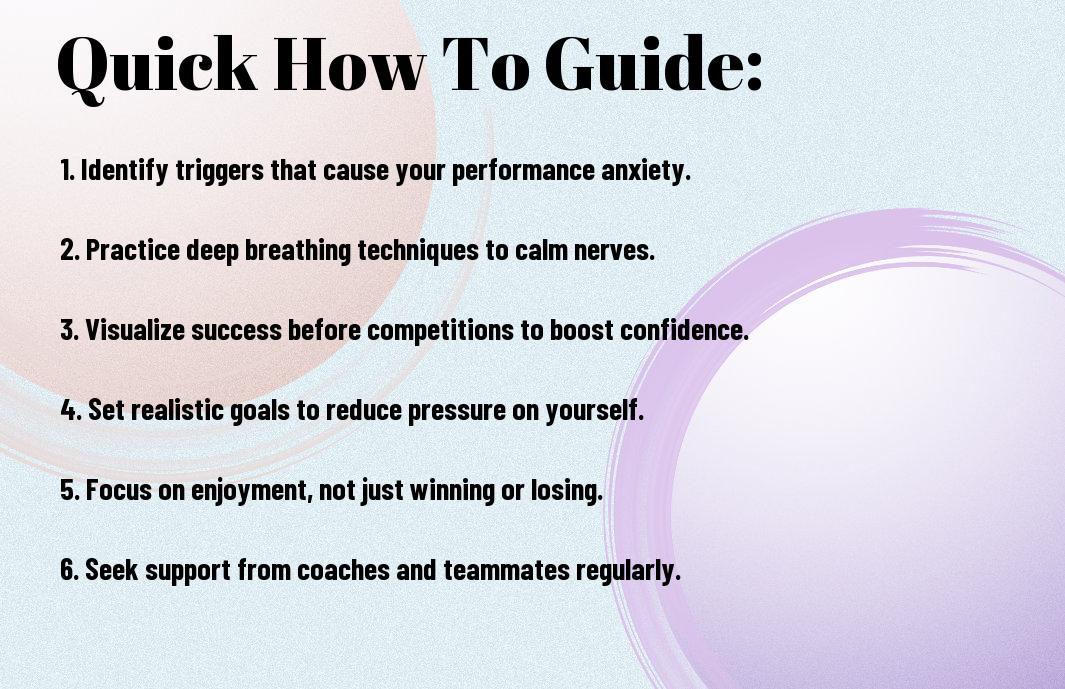
Some athletes experience performance anxiety in varying situations. To effectively overcome this challenge, it’s imperative to pinpoint the specific triggers that cause stress or fear during competition or practice. Understanding what leads to your anxiety can help you develop strategies to manage it, ultimately enhancing your overall performance. By identifying these triggers, you can take steps to address and reduce their impact on your athletic experience.
Self-Assessment Techniques
To gain insight into your triggers, consider keeping a journal to document your thoughts and feelings before, during, and after performances. Reflecting on specific situations that lead to anxiety can reveal patterns or recurring themes, which can be further explored through personal narratives or self-reflection questionnaires. This process can help you recognize your emotional responses and identify what specifically initiates your performance anxiety.
Common Triggers in Sports
One common trigger among athletes is the fear of failure, which can manifest as performance pressure during competitions. This fear may stem from external expectations, such as those from coaches, family members, or peers, leading to increased self-doubt and insecurity.
The pressure to perform well often results in athletes feeling they have to meet unrealistic standards, which can amplify anxiety levels. Factors such as comparing yourself to others, worrying about how you are perceived, or the significance of the event can contribute to this fear. Identifying these common triggers can help you take proactive steps to address them, fostering a more constructive mindset during your sporting pursuits.
Tips for Managing Anxiety
Keep your mind focused and your body relaxed with these helpful tips for managing anxiety:
- Establish a consistent routine before competitions.
- Practice mindfulness techniques regularly.
- Set realistic goals and expectations.
- Engage in physical activity to release pent-up energy.
- Communicate openly with coaches and teammates.
Any of these strategies can support you in navigating performance anxiety effectively.
Breathing Exercises
An effective way to manage anxiety is through breathing exercises. Concentrating on your breath can ground you and reduce feelings of panic. Try inhaling deeply for a count of four, holding for four, and exhaling slowly for four. This technique helps calm your nervous system and refocus your thoughts, making it easier to concentrate on your performance.
Visualization Techniques
Even the practice of visualization can be a powerful tool in overcoming performance anxiety. By envisioning your success in vivid detail, you can mentally prepare yourself for upcoming challenges.
To effectively utilize visualization, take a moment to close your eyes and create a clear mental image of yourself performing at your best. Picture every detail: your movements, your emotions, and even the sounds around you. This positive imagery can foster confidence and help shift your focus from anxiety to achievement. Engaging in this mental rehearsal before competitions can enhance your performance and reduce feelings of self-doubt.
Building Mental Resilience
Your capacity to bounce back from setbacks and maintain focus during competitions is vital for overcoming performance anxiety in sports. Building mental resilience involves developing coping strategies, challenging negative thoughts, and embracing an adaptable mindset. By facing challenges head-on, you can transform anxiety into a source of strength, allowing you to perform at your best consistently.
Developing a Positive Mindset
If you approach competition with a mindset focused on learning and growth, you will find that setbacks become less daunting. Cultivating a positive attitude helps shift your focus from fear of failure to excitement about improvement. This perspective invites you to celebrate progress, making it easier to tackle challenges with confidence.
The Importance of Routine
Assuming you establish a consistent pre-performance routine, your brain can transition into a focused state, reducing anxiety. This structure not only calms your mind but also provides a sense of familiarity, which can be reassuring when facing high-pressure situations.
Routine helps in creating a sense of predictability in your performance environment. By incorporating consistent warm-up exercises, mental visualization, or breathing techniques into your routine, you signal to your body that it’s time to perform. This repetition builds confidence and instills a feeling of control, making it easier to manage nerves and focus on the task at hand.
Strategies for Pre-Competition Preparation
Once again, preparing for competition is vital to overcoming performance anxiety. By establishing a solid pre-competition strategy, you can equip yourself with the tools necessary to boost your confidence and reduce tension. This preparation involves both mental techniques and physical routines, helping you feel grounded and focused as the event approaches. Implementing these strategies will allow you to channel your energy into peak performance rather than anxiety.
Creating a Pre-Game Ritual
To alleviate anxiety, crafting a personal pre-game ritual can help set the tone for your performance. This ritual might include activities that ground you, such as listening to music, engaging in mindfulness exercises, or visualizing your success. By consistently performing this routine before competitions, you can create a sense of familiarity and control, ultimately reducing nervousness and enhancing your focus.
Focus Techniques
You can also implement a variety of focus techniques to maintain your concentration during competition. Practicing mindfulness and breathing exercises can help you stay present and manage negative thoughts. These techniques allow you to focus on the imperative elements of your performance rather than distractions, enhancing your overall experience. Strategies such as visualization and positive affirmations can further bolster your mental state, enabling you to perform at your best.
PreCompetition focus techniques involve training your mind to concentrate on the task at hand and eliminate distractions. Incorporate deep breathing exercises to calm your nerves and center your thoughts. Visualization can be particularly powerful; picture yourself succeeding and mastering each moment of the competition. Additionally, using positive affirmations can help shift your mindset away from self-doubt towards self-belief, reminding you of your strengths and capabilities as an athlete. This combination of techniques strengthens your mental resilience, empowering you to approach your performance with confidence.
Seeking Professional Help
For athletes struggling with performance anxiety, seeking professional help can be an effective way to develop coping strategies and mental resilience. Engaging with experts such as sports psychologists, coaches, or trainers can provide you with tailored techniques to manage anxiety, improve focus, and enhance overall performance. These professionals can offer valuable insights and support, helping you navigate the psychological challenges that may arise in competitive environments.
Working with Coaches and Trainers
To enhance your performance and tackle anxiety, collaborating closely with coaches and trainers can play a significant role. These individuals understand the pressures athletes face and can help you develop tailored training programs that not only build your physical skills but also foster mental strength. Open communication about your anxieties can lead to strategies that ease pressure on game day, contributing to a more confident performance.
When to Consult a Sports Psychologist
Psychologist involvement becomes important when you find that anxiety is interfering significantly with your performance, enjoyment, or training. If you’re experiencing persistent worry, panic attacks, or self-doubt during competitions, it is important to seek professional guidance, as they can provide you with effective techniques to address these challenges.
A sports psychologist can help you identify the root causes of your anxiety and work on specific strategies tailored to your needs. They can guide you through cognitive-behavioral techniques, visualization exercises, and relaxation methods, equipping you with tools to manage stress and build confidence. Recognizing when your anxiety is beyond what you can handle on your own, and reaching out for help can be a proactive step towards enhancing your performance and overall well-being.
To wrap up
Drawing together the various strategies for overcoming performance anxiety in sports, focus on building your mental resilience through preparation, practice, and visualization techniques. Incorporate relaxation methods like deep breathing or mindfulness to manage stress levels. Engaging in positive self-talk will help reframe negative thoughts, while setting achievable goals will keep your focus on improvement rather than fear of failure. By prioritizing your mental well-being alongside your physical training, you’ll foster a more confident and enjoyable sporting experience.
FAQ
Q: What techniques can help manage performance anxiety before an event?
A: To manage performance anxiety prior to a sporting event, athletes can utilize several techniques. Visualization is a powerful method; athletes should visualize themselves successfully performing in their sport, experiencing the feelings of confidence and competence. Breathing exercises can also help; taking slow, deep breaths can calm the nervous system and reduce anxiety. It’s beneficial to create a pre-performance routine that includes physical warm-ups and mental focus exercises, allowing athletes to channel their energy positively before competing.
Q: How can athletes shift their focus to reduce anxiety during competition?
A: Athletes can reduce anxiety during competition by focusing on the process rather than the outcome. This means concentrating on their techniques, strategies, and execution instead of worrying about winning or losing. Mindfulness practices, such as staying present and engaged in the moment, can further decrease performance pressure. Additionally, maintaining positive self-talk and affirmations can reinforce confidence and reduce negative thoughts that contribute to anxiety.
Q: What role does preparation play in overcoming performance anxiety in sports?
A: Preparation plays a significant role in alleviating performance anxiety. Athletes who engage in thorough training and practice feel more confident in their abilities, which can lead to reduced anxiety levels. Setting specific, achievable goals during practice sessions can provide a sense of progress and accomplishment. Furthermore, simulated competitions during practice can help athletes acclimate to the stress of real events, allowing them to build familiarity and reduce anxiety when faced with actual competition.
